

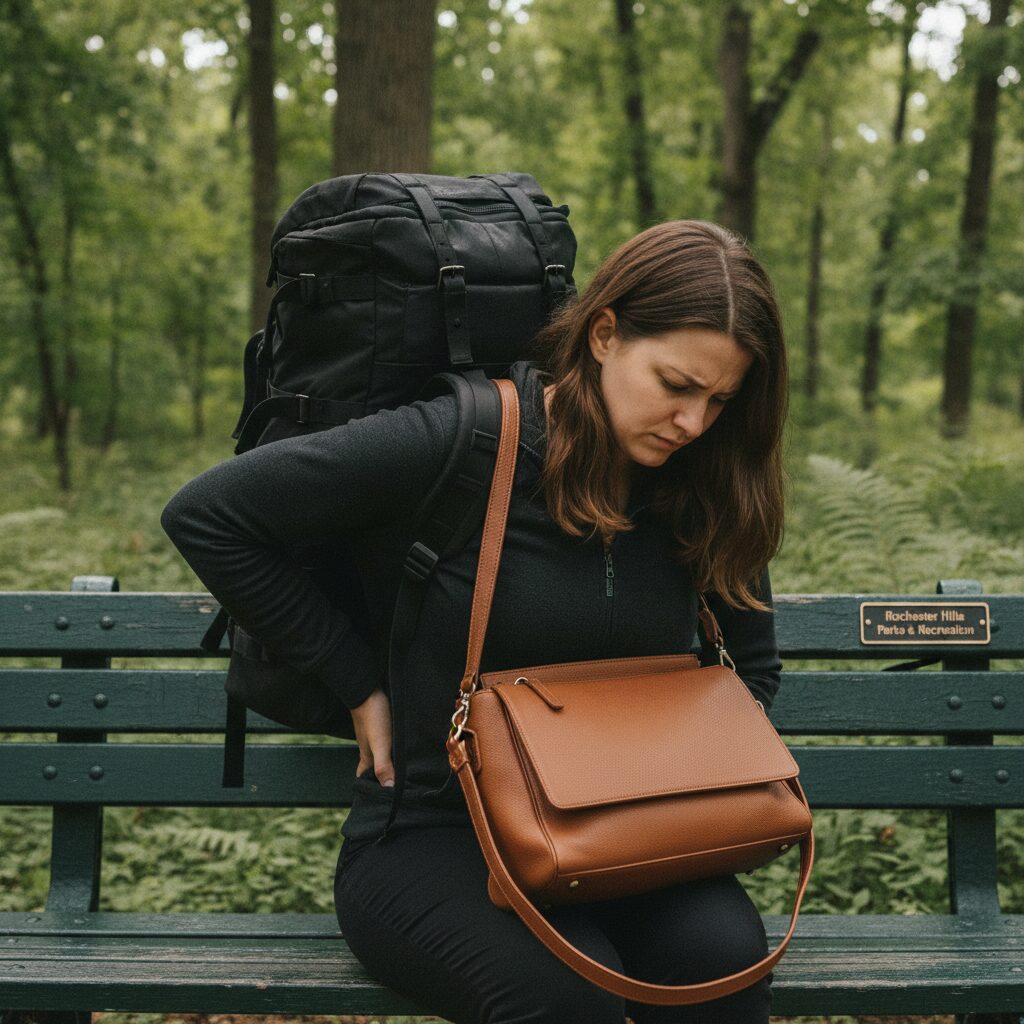
Think about the last time you hauled a bag across a parking lot, up a flight of stairs, or through a long day at school or the office. You probably did not think twice about it. Yet that everyday habit may be quietly adding up to a nagging ache between your shoulder blades, a tight lower back, or a sore neck that never quite goes away. If you have been searching for back pain relief Rochester Hills residents can count on, the answer might be hanging right off your shoulder.
Backpacks, purses, laptop bags, gym duffels, and diaper bags all share one thing in common: they load weight onto your body in ways your spine was never designed to handle for hours at a time. The problem is rarely one dramatic event. It is the slow, repetitive strain of lifting, carrying, and shifting that same load day after day, month after month.
In this guide, we will look at how bags affect your posture and muscles, which carrying styles tend to cause the most trouble, how to choose a better bag, and what you can do right away to ease the strain. Whether you are a student, a parent, a commuter, or a small business owner who lives out of a tote, you will find practical, realistic steps you can start using today.
How a Heavy Bag Changes the Way You Stand
Your spine is a stack of small bones balanced over your pelvis, and it works best when weight is distributed evenly. The moment you add a bag to one shoulder, your body has to compensate. You might lean away from the load, hike one shoulder higher, or twist your torso slightly to keep the strap from sliding off. Each of those adjustments feels small, but together they pull your posture out of alignment.
Over time, the muscles on one side of your back work overtime while the other side goes slack. That imbalance can tug on the joints of your spine and pelvis, creating stiffness and soreness that lingers long after you set the bag down. If you notice aches that seem to show up after a long commute or a busy day of errands, this is often a clue. Many people discover that the discomfort was not random at all, it was a predictable response to an uneven load. Some patients who want a closer look at those patterns turn to Delta Chiropractic Rochester Hills for a thorough assessment of how posture and daily habits fit together.
Why Purses and Shoulder Bags Are Such Common Culprits
A purse seems harmless, but the average one fills up fast. Wallet, phone, keys, water bottle, makeup, sunglasses, a notebook, snacks, and a handful of things you forgot you were carrying can easily add up to a surprising amount of weight. Because the load rests on a single shoulder, the muscles at the top of your back and neck have to grip continuously to keep it from falling.
That constant gripping is where trouble starts. The upper trapezius, the large muscle that runs from your neck to your shoulder, can become tight and tender. Some people feel it as a burning knot near the shoulder blade, others as a headache that creeps up from the base of the skull. Crossbody styles help distribute weight slightly better, but they can still pull one side of the body downward if the bag hangs low or sits too heavy. The good news is that small changes, such as lightening the load and alternating sides, can noticeably reduce the daily strain.
Backpacks Are Not Automatically Safe
Backpacks have a reputation as the healthier choice, and in many ways they are, because two straps spread weight across both shoulders. But the way a backpack is worn matters just as much as the bag itself. Slinging it over one shoulder, wearing the straps too loose, or letting the bag hang low against the lower back all undo its advantages.
When the pack sags, your body naturally leans forward to counterbalance it, rounding your upper back and pushing your head ahead of your shoulders. This forward posture strains the neck and the muscles between the shoulder blades. Students and professionals who carry laptops, textbooks, and chargers are especially prone to overloading. A helpful rule of thumb many practitioners share is to keep the load to a modest fraction of your body weight, and if you find yourself leaning to carry it, the bag is probably too heavy. People who want to understand the bigger picture can learn more here about options for easing everyday spinal discomfort.
Warning Signs Your Bag Is Hurting You
Your body usually gives you hints before a small annoyance becomes a bigger problem. Pay attention to patterns that line up with your carrying habits. Soreness that appears at the end of the day, discomfort that favors one side, or stiffness that eases when you are not carrying anything can all point toward your bag as a contributor.
- One shoulder sits noticeably higher than the other when you look in a mirror.
- You feel tingling or numbness in the arm or hand on the side where you carry your bag.
- Red marks or indentations appear on your shoulders after removing straps.
- Your neck feels tight or you get tension headaches after long days of carrying.
- You catch yourself leaning or tilting to one side while walking.
None of these signs automatically means something serious, but they are worth taking seriously. If symptoms persist for more than a couple of weeks or begin to interfere with sleep and work, it is sensible to have a professional evaluate what is going on rather than simply hoping it fades.
Back Pain Relief in Rochester Hills Starts With Better Carrying Habits
Before you spend money on gadgets or supplements, start with the simplest fix: change how you carry things. Most people can reduce strain significantly just by editing what goes into the bag and how it is worn. Clearing out the clutter is the first step. Empty your bag completely once a week and put back only what you actually used.
Next, think about placement. Heavy items should sit close to your back and centered, not dangling at the bottom or pushed to one side. Tighten the straps so the bag rides high between the shoulder blades, and use the hip belt or chest strap if your pack includes one. If you have been dealing with stubborn discomfort, speaking with a Chiropractor in Rochester Hills, MI can help you pinpoint whether your carrying habits are a main driver or simply one piece of a larger puzzle. A hands-on evaluation often reveals movement restrictions that you would never notice on your own.
Choosing a Bag That Works With Your Body
Shopping for a bag usually revolves around looks, price, and brand, but a few body-friendly features are worth adding to your checklist. Wide, padded straps spread pressure over a larger area and reduce digging into the shoulder. A structured back panel keeps hard objects from poking into your spine. Multiple compartments help you distribute weight evenly instead of piling everything into one pocket.
Weight of the empty bag matters too. Some stylish leather totes weigh several pounds before you put a single thing inside, which means you start with a handicap. Compare the table below for a quick look at common bag types and what to watch for.
| Bag Type | Main Strength | Common Drawback |
|---|---|---|
| Two-strap backpack | Even weight across both shoulders | Easy to overload or wear too low |
| Single shoulder purse | Quick access to essentials | Uneven load on one side of the body |
| Crossbody bag | Better stability while walking | Can still pull one side downward |
| Rolling bag | Takes weight off the spine | Awkward on stairs and uneven ground |
Smart Packing: What Really Needs to Be in There
Packing smart is a skill, and it pays off quickly. Start by sorting items into three groups: daily essentials, occasional items, and things you carry out of habit. The third group is where most of the excess weight hides. Old receipts, extra chargers, half-empty water bottles, and a second pair of shoes can quietly add pounds without helping you at all.
For students and professionals who carry laptops, consider whether you truly need to bring it every single day. A lightweight tablet or a printed copy of only what you need can lighten the load considerably. Keep liquids in smaller containers, use slim wallets, and pack heavier items closest to your back. If your job involves hauling tools, samples, or paperwork, a small wheeled case for the heaviest items can protect your spine and still keep you looking polished and professional when you walk into a meeting.
Simple Stretches to Undo a Day of Carrying
Even with perfect habits, it helps to counter the effects of carrying with a few gentle movements. These do not require equipment or a long time commitment. A couple of minutes in the evening can make a noticeable difference in how your back feels the next morning.
- Doorway chest stretch: place your forearms on a doorframe and gently lean forward to open the chest.
- Upper trap stretch: tilt your ear toward your shoulder and hold for twenty to thirty seconds on each side.
- Shoulder blade squeezes: pull your shoulder blades together and hold for five seconds, repeating ten times.
- Cat and cow: move slowly between arching and rounding your back on hands and knees.
Move gently and stop if anything causes sharp pain. Stretching should feel like a mild pull, not a strain. Consistency matters more than intensity, so aim for a short routine you will actually keep doing.
When Stiffness and Joint Changes Make Carrying Harder
Not everyone starts from the same baseline. If you already live with stiff joints or age-related changes in the spine, carrying a bag can feel far more punishing than it does for someone with a healthy, flexible back. Cartilage wear, reduced range of motion, and inflammation can all make the muscles around your spine work harder to protect sore areas.
In these cases, the weight and style of your bag matter even more, and it may be worth rethinking what you carry altogether. Understanding how joint stiffness affects daily movement can help you make smarter choices, and resources such as How Rochester Hills Chiropractors Address Arthritis-Related Joint Stiffness explain how conservative care can fit into the picture. Pairing a lighter load with gentle mobility work often gives people with stiff joints the most comfortable path forward.
Core Strength and Its Role in Supporting Your Load
Your core muscles act like a natural support belt for your spine. When they are strong and responsive, they absorb some of the stress from carrying a bag and help keep your posture upright. When they are weak, your lower back picks up the slack, and that is when strain and irritation tend to show up.
Weak abdominal and hip stabilizers can also change how your pelvis tilts, which affects how weight travels through your hips and legs. Some people notice nerve-related symptoms such as radiating discomfort down the leg when their core support is lacking, a topic explored in How Core Weakness Can Contribute to Sciatica Symptoms in Rochester Hills. Building core strength does not require a gym membership. Planks, bird dogs, glute bridges, and dead bugs done a few times a week can steadily improve your ability to handle everyday loads.
Kids and Teens Carrying Too Much, Too Soon
Children and teenagers are often the heaviest bag carriers relative to their size. Textbooks, binders, water bottles, sports gear, and electronics all end up crammed into a single pack, frequently slung over one shoulder because it looks cooler that way. Growing spines are adaptable, but they are not immune to repeated strain.
Parents can help by checking the backpack regularly and asking a few simple questions. Is your child leaning forward to carry it? Do they complain of sore shoulders or a stiff neck after school? Are the straps tight and both worn every day? Encourage them to use lockers, split loads between trips, and leave unneeded items at home. Teaching good carrying habits early can set a pattern that protects their backs well into adulthood, and it costs nothing but a little attention each morning.
Your Next Steps
Your bag may seem like a small part of your day, but it can have an outsized effect on how your back feels. The weight, the strap style, the side you favor, and the way you wear it all shape the stress your spine absorbs thousands of times a week. The encouraging part is that most of these factors are well within your control.
Start by emptying your bag and removing anything you do not need. Switch sides regularly, wear straps snugly, and keep heavy items close to your body. Consider a better-fitting bag if yours digs into your shoulders or sags low. Add a few minutes of stretching and core work to your week, and watch for the warning signs that your body is asking for a change, such as one-sided tightness, tingling, or headaches that follow long carrying days.
If discomfort lingers despite these adjustments, do not simply push through it. Persistent aches deserve a proper evaluation so you can understand what is actually driving them and address it early, before a minor annoyance turns into a stubborn problem. Finding effective back pain relief is usually a combination of smarter habits, supportive movement, and professional guidance when needed. Make one small change this week, notice how your body responds, and build from there. Your spine works hard for you every single day, and a lighter, better-balanced load is one of the kindest things you can do in return.