

Migraine Chiropractic Care in Rochester Hills, MI
Migraines can interfere with work, sleep, exercise, concentration and everyday life. Migraine is a neurological disorder with multiple possible triggers and contributing factors. Delta Chiropractic evaluates neck and musculoskeletal concerns that may coexist with certain migraine and headache patterns to determine whether conservative chiropractic care may be appropriate.
- Personalized Migraine & Headache Evaluation
- Conservative Chiropractic Care
- Convenient Rochester Hills Location
NEW PATIENT SPECIAL
Start With a Complimentary Consultation
Meet Dr. Justin Berlin, talk through what you are feeling, and learn whether chiropractic care may be right for you before you commit to anything. No obligation.
Understanding Migraine
What Is a Migraine?
A migraine is a neurological disorder that can cause recurring attacks involving headache and other symptoms such as nausea, sensitivity to light or sound, and neurological symptoms in some people.
Migraine is more than simply a bad headache. Symptoms vary between individuals, and migraine can occur with or without aura. Not every severe headache is migraine, and migraine should not automatically be attributed to the neck or spine.
Because several headache disorders and medical conditions can produce overlapping symptoms, diagnosis belongs with an appropriately qualified healthcare professional.

Migraine vs. Headache
Is a Migraine the Same as a Headache?
No. Headache is a symptom, while migraine is a neurological disorder that can include headache along with other symptoms.
Migraine attacks may involve throbbing or pulsating pain, nausea, sensitivity to light or sound, worsening with routine activity, difficulty concentrating, visual or sensory aura in some people, and neck discomfort in some people.
For a broader discussion of headache patterns, see Delta's Headaches page.
Important Distinction
Neck Pain Does Not Automatically Mean the Neck Caused the Migraine
Neck discomfort can occur during migraine attacks, and some people also have a separate mechanical neck problem. The presence of neck pain by itself does not establish that the cervical spine caused the migraine.
An evaluation can help determine whether a coexisting musculoskeletal concern appears to be present and whether conservative care for that component may be appropriate.
Common Symptoms
What Can a Migraine Feel Like?
Throbbing or Pulsating Pain
Migraine pain is often described as throbbing or pulsating, although symptoms vary.
Light Sensitivity
Bright light may worsen symptoms during some migraine attacks.
Sound Sensitivity
Noise may become uncomfortable during an attack.
Nausea
Some migraine attacks involve nausea or vomiting.
Aura
Some people experience temporary visual, sensory or other neurological symptoms before or during migraine.
Neck Discomfort
Neck discomfort may occur with migraine, but its presence does not necessarily mean the neck caused the migraine.
Symptoms alone should not be used to self-diagnose migraine.
Migraine With Aura
What Is Migraine With Aura?
Some people experience temporary neurological symptoms before or during migraine. These can include visual changes, flashing lights, zigzag patterns, blind spots, tingling, sensory changes, or speech and language symptoms in some cases.
Not every visual or neurological disturbance is migraine aura. New neurological symptoms should receive appropriate medical evaluation, especially when a person has never experienced them before.
Migraine Without Aura
Can You Have a Migraine Without Aura?
Yes. Many migraine attacks occur without aura.
Possible symptoms can include headache, nausea, sensitivity to light or sound, and worsening with routine activity. The exact combination, intensity and duration of symptoms varies from person to person.
Migraine & the Cervical Spine
Why Do Migraines and Neck Pain Sometimes Occur Together?
Neck pain and stiffness are reported by some people with migraine. However, the presence of neck pain does not prove that the cervical spine caused the migraine.
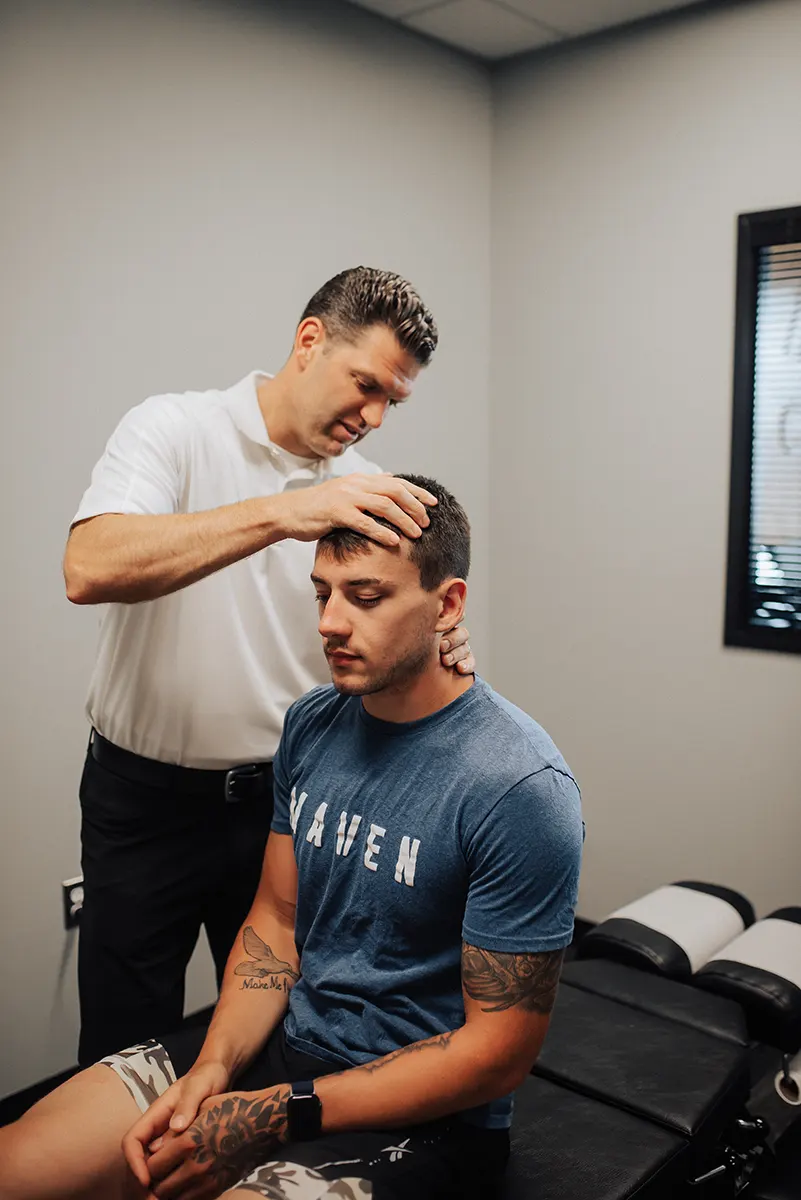
When appropriate, musculoskeletal evaluation may consider cervical mobility, muscle tension, joint irritation, sustained posture, previous neck injury and coexisting mechanical neck pain.
An evaluation may help determine whether a separate musculoskeletal component appears to be present.
Individual Patterns
What Can Trigger a Migraine?
Sleep & Stress
Sleep disruption and physical or emotional stress are commonly reported migraine triggers.
Food, Hydration & Meals
Some people report certain foods or drinks, dehydration, or skipped meals as triggers.
Sensory & Environmental Factors
Bright light, strong smells and weather changes may be reported as triggers by some people.
Hormonal Changes
Hormonal changes can be associated with migraine patterns in some people.
Activity & Routine Changes
Changes in routine or certain physical stresses may coincide with attacks for some individuals.
Triggers Are Individual
Identifying patterns may help some people understand their attacks, but triggers are not the same as the underlying cause of migraine disease.
Chiropractic & Migraine
Can a Chiropractor Help With Migraines?
Chiropractic care should not be presented as a cure for migraine. For some people who experience migraines along with neck pain, restricted cervical movement or other musculoskeletal concerns, chiropractic evaluation may identify coexisting mechanical factors that may be appropriate for conservative care.
Delta may evaluate headache and migraine history, neck symptoms, previous injuries, cervical mobility, muscle tension, movement patterns, posture and relevant findings when appropriate.
Depending on the clinical picture, primary care evaluation, neurology evaluation, imaging, medical management, co-management or referral may be appropriate.

Your Evaluation
How Delta Evaluates Migraine & Headache Concerns
Migraine & Health History
Discuss symptom pattern, frequency, duration, location, associated symptoms, triggers, neck symptoms, previous injuries and medical history.
Movement & Musculoskeletal Evaluation
When appropriate, evaluate cervical movement, joint mobility, muscle tension, posture and relevant movement patterns.
Relevant Screening
Assess findings that may indicate the need for medical evaluation, co-management or referral.
Personalized Recommendations
Determine whether conservative musculoskeletal care may be appropriate or whether another healthcare provider should be involved.
Individualized Care
What May Chiropractic Care Include When Migraines Occur With Neck Problems?
Depending on examination findings, recommendations for a coexisting musculoskeletal concern may include:
- Chiropractic adjustments
- Joint mobilization
- Therapeutic exercise
- Movement recommendations
- Posture and ergonomic guidance
- Activity modification
- Home-care recommendations
Not every patient needs or receives every type of care. These interventions should not be presented as treating the neurological cause of migraine.
Learn more about Delta's Chiropractic Care.
Understanding Headache Types
Migraine vs. Other Headache Patterns
What Is the Difference Between Migraine and a Cervicogenic Headache?
Migraine is a neurological disorder. Cervicogenic headache refers to head pain associated with a problem originating from structures in the cervical region. Symptoms may overlap, and neck pain can occur with migraine. A person should not assume a headache is cervicogenic simply because neck discomfort is present.
What Is the Difference Between Migraine and a Tension Headache?
Tension-type headache is commonly associated with pressure or tightness. Migraine may involve throbbing pain, nausea, sensory sensitivity and other neurological features. Symptoms can overlap, and evaluation may be necessary to distinguish headache disorders.
Know When to Seek Medical Care
When Should a Migraine or Severe Headache Be Medically Evaluated?
Urgent medical assessment may be appropriate for a sudden extremely severe headache, a new “worst headache,” new weakness or numbness, difficulty speaking, new significant vision changes, confusion, loss of consciousness, seizure, severe headache after significant head trauma, fever with severe headache or neck stiffness, new neurological symptoms, a major change in an established migraine pattern, or other severe or rapidly worsening symptoms.
These symptoms should not be diagnosed from a website or automatically assumed to be migraine. Prompt medical evaluation is appropriate.
Patient Experiences
See What Our Patients Say
Why Delta
Why Choose Delta Chiropractic?
Personalized Evaluation
Care begins by understanding your migraine or headache pattern, neck symptoms, health history and movement.
Conservative Approach
Recommendations depend on examination findings and individual needs.
Appropriate Referral
Symptoms that warrant medical evaluation or another type of care should be referred appropriately.
Rochester Hills Location
Conveniently located on S Rochester Road in Rochester Hills.

Meet Your Chiropractor
Meet Dr. Justin Berlin
Dr. Justin Berlin is the owner of Delta Chiropractic and a 2006 graduate of Palmer College of Chiropractic. A lifelong Michigander with a background in junior and college hockey, he has personal familiarity with sports-related injuries and an interest in helping patients remain active and function comfortably.
Frequently Asked Questions
Migraine Chiropractic Care FAQs
What is a migraine?
A migraine is a neurological disorder that can cause recurring attacks involving headache and other symptoms such as nausea, sensitivity to light or sound, and neurological symptoms in some people.
Can a chiropractor help with migraines?
Chiropractic care should not be presented as a cure for migraine. When migraine occurs alongside neck pain, restricted cervical movement or other musculoskeletal concerns, a chiropractic evaluation may identify coexisting mechanical factors that may be appropriate for conservative care.
What happens at my first visit, and do you take insurance?
Your first consultation is complimentary. We talk through your symptoms, check movement and nerve function, and tell you whether chiropractic care fits. Insurance coverage and benefits vary by plan. Contact Delta Chiropractic to verify current participation, eligibility and benefits before your visit at (248) 963-8181.
How are migraine and headache concerns evaluated at Delta Chiropractic?
Evaluation begins with the symptom and health history. When appropriate, Delta may assess cervical movement, joint mobility, muscle tension, posture, movement patterns and relevant findings that may indicate the need for medical evaluation or referral.
When should I worry about a migraine or severe headache?
Prompt medical assessment is appropriate for a sudden extremely severe headache, a major change in an established pattern, new neurological symptoms, loss of consciousness, seizure, severe symptoms after significant trauma, or other severe or rapidly worsening symptoms.
What headache symptoms require emergency medical evaluation?
A sudden extremely severe headache, new weakness or numbness, difficulty speaking, significant new vision changes, confusion, loss of consciousness, seizure, or severe headache with concerning neurological symptoms requires urgent medical assessment.
Where can I see a chiropractor for migraines in Rochester Hills?
Delta Chiropractic is located at 1136 S Rochester Rd Suite B, Rochester Hills, MI 48307. Call (248) 963-8181 or request an appointment online.
Convenient Rochester Hills Location
Migraine Chiropractic Care in Rochester Hills
Delta Chiropractic
1136 S Rochester Rd Suite B
Rochester Hills, MI 48307
Phone: (248) 963-8181
Ready to Get Started?
Schedule Your Migraine & Headache Evaluation in Rochester Hills
If migraines or recurring headaches occur alongside neck pain, stiffness or other musculoskeletal concerns, schedule an evaluation with Delta Chiropractic to determine whether conservative chiropractic care may be appropriate for those contributing factors.