

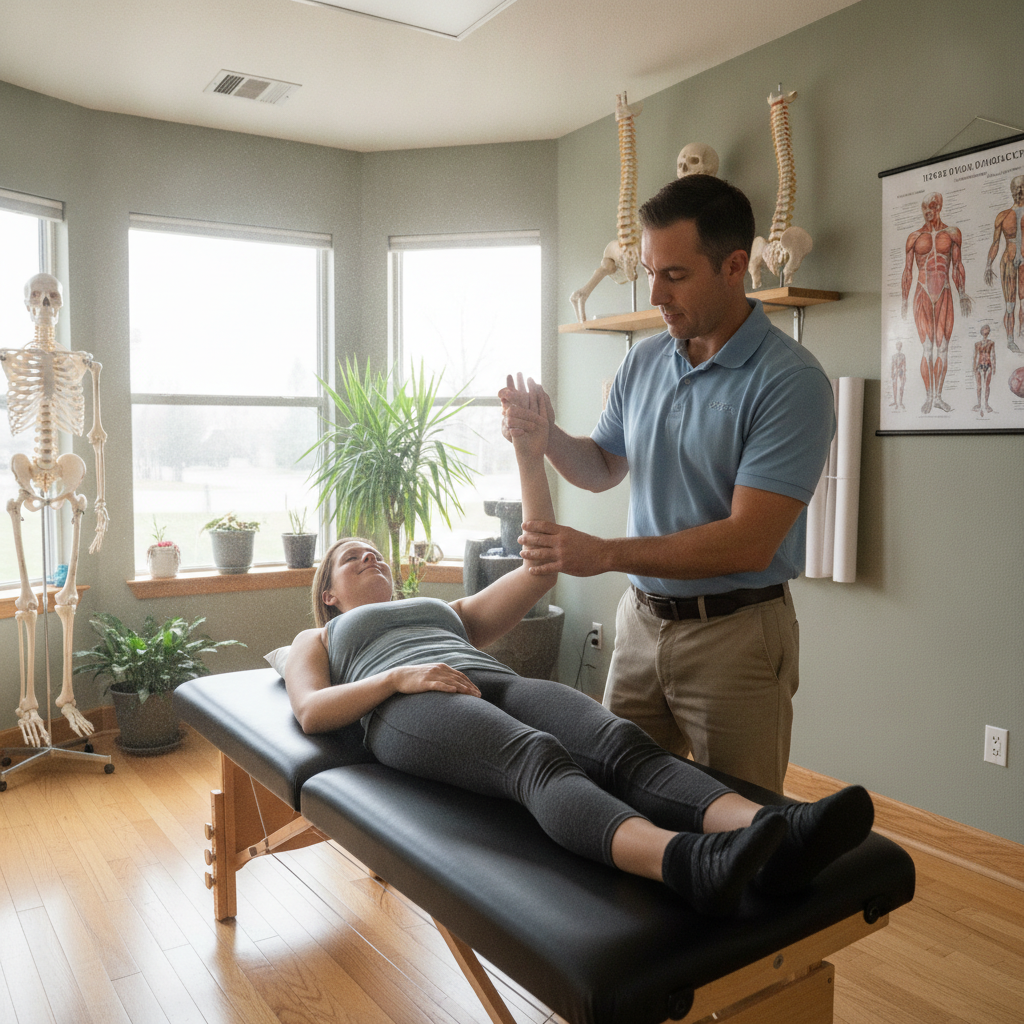
Most people picture a chiropractic visit as a quick spinal adjustment, but some offices layer in a very different kind of exam. If you have ever watched a practitioner press lightly on your outstretched arm while you hold still, you have seen applied kinesiology in action. It looks simple, almost too simple, and that is exactly why it raises questions. What is the practitioner actually checking? Is it science, tradition, or something in between?
If you have been searching for a chiropractor rochester hills residents recommend, you may have run into applied kinesiology on a service menu and wondered whether it deserves a place in your care plan. This guide breaks the topic down in plain language. We will cover what applied kinesiology is, how a typical muscle test works, what it is meant to reveal, where the evidence is limited, and how to decide if it fits your goals. Whether you are a busy business owner juggling desk work, a developer hunched over a keyboard all day, or simply someone curious about your options, you will leave with a clear, balanced picture and a few smart questions to bring to your first appointment.
What Applied Kinesiology Actually Is
Applied kinesiology, often shortened to AK, is an examination approach that uses manual muscle testing as a way to gather information about how the body is functioning. The idea is that a muscle’s ability to hold against light pressure can reflect how well the nervous system is communicating with that muscle. A practitioner who uses AK treats the test as one clue among many, not as a standalone diagnosis.
It is worth separating AK from academic kinesiology, which is the broad study of human movement taught at universities. The two share a name but not a method. AK was developed within chiropractic circles and is typically offered as an add-on to a standard exam. Patients searching for chiropractic care near Rochester Hills will often find that practices describe AK as a complementary tool alongside traditional assessments like posture checks, range of motion tests, and orthopedic screening.
Understanding that framing helps set realistic expectations. AK is meant to guide where a practitioner looks next, not to replace imaging, lab work, or medical evaluation when those are warranted.
The Origins and Philosophy Behind the Method
The method traces back to a Michigan chiropractor in the mid 1960s who noticed that certain muscles seemed to test weak and then strengthen after specific treatments. From that observation grew a broader philosophy: that muscle behavior can act like a window into how the body is coping with stress, whether that stress is mechanical, chemical, or emotional.
Practitioners who follow this philosophy often talk about the body as an interconnected system rather than a collection of isolated parts. A tight hip might be examined alongside foot mechanics. A cranky shoulder might prompt questions about neck posture or even breathing patterns. This whole-body mindset is appealing to many people who feel their previous care focused too narrowly on the exact spot that hurts.
It is also where much of the debate begins. Supporters point to the holistic framework and the practical, hands-on nature of the exam. Critics point out that some of the broader claims lack rigorous testing. Holding both perspectives in mind is the healthiest way to approach AK as a patient.
How a Manual Muscle Test Works Step by Step
A manual muscle test is surprisingly low tech. You will usually be asked to position a limb so a specific muscle is engaged, for example holding your arm out to the side at shoulder height. The practitioner then applies gentle, steady pressure and asks you to resist. They are noting whether the muscle holds firmly, feels springy, or gives way.
Here is the general flow you can expect:
- You position the muscle in a contracted state.
- The practitioner applies light pressure for a few seconds.
- They observe how smoothly the muscle holds and compare it to the opposite side.
- They may repeat the test after a small input, such as repositioning a joint, to see whether the response changes.
The test is not a contest of strength. In fact, pushing as hard as you can usually defeats the purpose. The goal is a controlled, cooperative effort so the practitioner can read subtle differences. Most patients describe the experience as quick, painless, and a little curious.
What Practitioners Say They Are Looking For
When a muscle tests as inhibited, meaning it does not hold as firmly as expected, an AK practitioner may interpret that as a sign worth investigating. Common areas of interest include joint restrictions, trigger points, scar tissue, and movement patterns where one muscle seems to be overworking while another underperforms.
A good example is the person who sits all day. Their hip flexors may be chronically tight while the glutes seem sleepy. An AK exam might flag the glutes as testing weak, which could lead the practitioner to examine pelvic motion and hip mobility. A chiropractor rochester hills office might then pair that finding with targeted soft tissue work or a simple strengthening routine.
The key phrase is “may interpret.” Practitioners are using muscle responses as prompts for further questions, not as definitive answers. Responsible providers cross-check what they feel with your history, your movement, and other exam findings before drawing conclusions.
Where Applied Kinesiology Fits Into a Visit
AK rarely stands alone. In most offices it is woven into a broader visit that begins with a conversation about your symptoms, work habits, sleep, and activity level. From there, the practitioner might observe how you stand and walk, check joint motion, and then use muscle testing to refine where to focus.
Think of it as one tool in a toolbox. A skilled Chiropractor in Rochester Hills, MI typically has several ways to assess a problem, and AK may appear alongside palpation, posture analysis, and functional movement screens. Some practitioners lean on it heavily. Others use it sparingly or not at all.
If you are new to this style of exam, do not be shy about asking how it will be used in your plan. A clear explanation of what is being tested, why it matters, and what happens next is a sign of a practitioner who respects your understanding and your time.
How It Differs From Other Chiropractic Assessments
Not every chiropractic assessment relies on muscle testing. Orthopedic tests, for instance, are designed to provoke or relieve specific symptoms in a standardized way, like raising a leg to see whether nerve irritation reproduces pain. Imaging, when appropriate, offers a structural snapshot. Movement screens look at how you perform patterns like squatting or reaching.
Applied kinesiology sits in a different lane. It focuses on the functional response of a muscle rather than a structure or a symptom reproduction. Some modern practices have also added tools such as How Laser Therapy Fits Into Modern Chiropractic Care in Rochester Hills, which shows how broadly the profession has expanded its toolkit over the years.
The table below offers a quick side-by-side comparison to help you see where each method tends to shine.
A Quick Comparison of Common Exam Methods
| Method | What It Looks At | Typical Use |
|---|---|---|
| Manual muscle testing | Muscle response to light pressure | Guiding where to look next |
| Orthopedic tests | Symptom reproduction in set positions | Narrowing likely pain sources |
| Posture and gait review | Alignment and movement habits | Spotting overload patterns |
| Imaging | Bone and tissue structure | Confirming or ruling out structural issues |
What the Research Does and Does Not Show
Honesty matters here. Manual muscle testing is a long-standing skill in physical therapy and rehabilitation, where it is used to grade muscle strength. Using muscle testing as a way to diagnose broader conditions, such as food sensitivities or organ issues, is a different matter, and that is where the scientific support is generally considered weak.
Reviews of the literature have tended to find that the more expansive claims associated with AK are not backed by high-quality evidence. That does not mean every patient who tries it will be dissatisfied. Many people report feeling heard and examined thoroughly, and a hands-on exam can have real value simply for identifying tight, weak, or poorly coordinated areas.
A sensible takeaway is to treat AK as a conversation starter rather than a verdict. If a practitioner makes bold promises, ask what the finding is based on, and consider a second opinion for anything that sounds like a medical diagnosis.
Who Tends to Be Curious About This Approach
Interest in AK tends to cluster among a few groups. Desk workers and developers often arrive with stiff necks and tight shoulders and like the idea of a whole-body explanation. Active adults who feel stuck in a plateau sometimes want a fresh set of eyes on how their muscles are firing. And people who have tried more conventional routes without feeling fully understood often appreciate the slower, conversational pace.
Small business owners, in particular, tend to value efficiency. If you are short on time, it helps to know that an AK-style exam is usually brief and can be folded into a standard visit rather than requiring a separate appointment.
That said, it is not a fit for everyone. People who prefer a strictly evidence-driven approach may feel more comfortable with practitioners who emphasize standardized tests and measurable outcomes. Neither preference is wrong. What matters is choosing a style that matches how you like to make decisions about your health.
Questions Worth Asking Before You Book
A little preparation goes a long way. Before your first visit, consider asking the office a few practical questions so there are no surprises:
- How is muscle testing used in your exam, and what will it tell us?
- What other assessments will you combine it with?
- How will you decide whether a treatment is working?
- When would you refer me to another provider or recommend imaging?
Pay attention to how the answers feel. Clear, grounded explanations are a good sign. Vague promises or pressure to commit to a long prepaid plan are worth pausing over. It is also reasonable to ask about the practitioner’s training and how long they have used AK in practice.
If you are dealing with disc-related discomfort, you can also ask whether options like Mechanical Traction for Disc Pain: A Non-Surgical Option in Rochester Hills might complement the exam findings.
Setting Realistic Expectations for Results
The best way to approach any new type of care is with curiosity and a clear yardstick. Before you start, write down two or three things you want to improve, such as being able to sit through a workday without a stiff neck, or getting through a weekend hike without a sore low back. Then check in on those goals every few visits.
Progress from conservative care is usually gradual. You might notice small shifts first, like easier movement in the morning or fewer flare-ups after long meetings. Be wary of any approach that promises dramatic overnight transformation. A trustworthy practitioner will talk in terms of trends and will adjust the plan if you are not seeing the changes you hoped for.
It also helps to pair in-office care with simple habits at home, such as brief movement breaks, a supportive workstation, and consistent sleep. Those everyday choices often do as much heavy lifting as anything that happens on the treatment table.
Final Thoughts
Applied kinesiology occupies an interesting spot in the chiropractic world. At its best, it is a gentle, hands-on way to explore how your muscles are working together and to guide a more personalized conversation about your care. At its weakest, it can be oversold, with claims that stretch well beyond what the evidence supports. The most useful stance is somewhere in the middle: open-minded, but anchored in good questions.
If you are curious, treat your first visit as a fact-finding mission. Notice whether the practitioner listens, explains what they are doing in plain language, and ties their findings back to your goals. Ask how the exam results translate into a concrete plan, and how progress will be measured. A transparent, collaborative office will welcome those questions.
Remember, too, that no single technique has to define your care. Muscle testing, movement screens, posture checks, and other tools can work together, and the right mix depends on you. Keep your expectations realistic, stay engaged in your own routine between visits, and do not hesitate to seek a second opinion when something does not sit right. With a little preparation, you can decide whether applied kinesiology deserves a spot in your plan and walk into your appointment feeling informed, confident, and in control of your next step.