

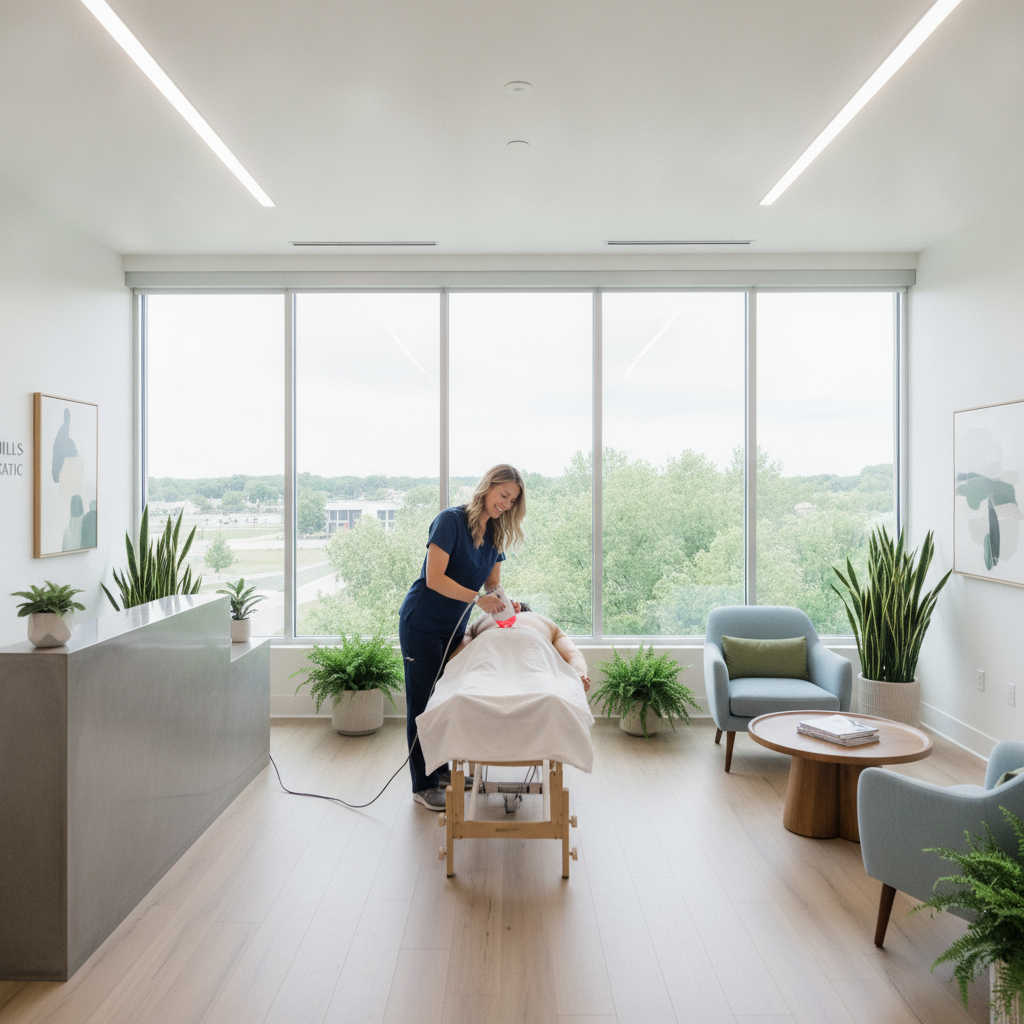
If you have spent any time reading about modern spine and joint care, you have probably noticed a new tool showing up in treatment rooms: the therapeutic laser. It looks futuristic, it is quiet, and it does not involve any twisting, pressing, or popping. For people who feel nervous about hands-on adjustments, or whose pain is too irritated to tolerate them, that sounds appealing. But what does laser therapy actually do, and where does it belong in a well-rounded plan? When you search for a chiropractor in Rochester Hills, you will increasingly see laser listed alongside adjustments, traction, and soft tissue work, and it helps to understand what you are really being offered.
This guide is written for busy people: small business owners who sit through long days, developers hunched over keyboards, parents juggling carpools, and anyone curious about newer options. We will keep the language plain and the claims honest. Laser therapy is not magic, and it is not right for everyone, but it can be a useful support piece when used thoughtfully. Below, we walk through how it works, what a session feels like, who tends to consider it, how it pairs with other techniques, and what questions to ask before you say yes. By the end, you should feel confident deciding whether it deserves a spot in your own care plan.
What Laser Therapy Actually Is
Therapeutic laser, often called low-level laser therapy or photobiomodulation, uses focused light at specific wavelengths to interact with tissue. It is very different from the surgical or cosmetic lasers most people picture. Those cut or burn. A therapeutic laser delivers light energy at a level that does not heat tissue dramatically, and the sensation is typically mild warmth or nothing at all.
The general idea is that cells can absorb certain wavelengths of light, which may influence local circulation, inflammation signaling, and tissue repair processes. Research on this topic is ongoing, and results vary by condition, dosage, and device, so it is smart to treat it as one supportive option rather than a cure-all. When you explore chiropractic care near Rochester Hills, you will find that offices describe laser in slightly different ways, which is why asking plain questions about purpose and expectations is so valuable.
How a Typical Session Feels
Most people are surprised by how uneventful a laser session is. You will usually be asked to lie down or sit comfortably while the provider positions a handheld applicator or a larger probe over the target area. Everyone in the room wears protective eyewear, which is standard safety practice and nothing to worry about. The device is then moved slowly across the area or held in place for a set number of seconds.
You might feel gentle warmth, a faint tingling, or absolutely nothing. There is no cracking, no pressure, and no recovery time afterward, so you can walk straight back to your desk or your errands. A single session is often short, sometimes only a few minutes per area, though the total visit may be longer if other services are combined.
Because the experience is so passive, some patients assume it must not be doing much. That is a fair thing to raise with your provider. Ask how progress will be measured, such as changes in movement, sleep, or daily comfort, so you are not relying on feel alone.
Where Laser Fits Alongside Adjustments
A helpful way to think about it is division of labor. Adjustments and mobilization aim to improve how joints move. Laser is generally positioned as a tool for the soft tissue and irritation side of the picture. Used together, they can address both the mechanical and the sensitive, inflamed parts of a problem rather than choosing one or the other.
For example, someone with a stiff, touchy lower back may start with gentler approaches and lean on laser while the area calms down, then add more movement-based work as tolerance improves. A good chiropractor rochester hills residents trust will explain why each piece is included and how the mix will change over time, rather than stacking every available service into every visit.
If a plan seems to include laser simply because it is available, that is a signal to ask more questions. The best plans are built from your exam findings, not from a menu.
Who Tends to Consider It
Laser therapy tends to come up for a few common groups. The first is people with sensitive or acutely irritated areas who are not ready for firm hands-on techniques. The second is patients who want a no-impact option, including older adults or anyone who is cautious about forceful manipulation. The third is people dealing with stubborn soft tissue complaints, such as tendon irritation around the elbow, shoulder, or heel, where repeated strain is part of the story.
Desk workers fit this picture often. Years of typing, mousing, and staring at monitors can leave forearms, necks, and upper backs reactive. Athletes and weekend hobbyists show up too, usually with overuse patterns rather than sudden injuries.
That said, interest does not equal suitability. Your provider should review your history, current medications, and any conditions that make light-based treatment a poor fit. If you want a general starting point for finding a qualified provider, a Chiropractor in Rochester Hills, MI can walk you through whether laser makes sense for your situation.
Laser Compared With Other Common Tools
Modern care rooms hold many options, and it can feel overwhelming to sort them out. The table below offers a simple side by side view of how laser compares with a few familiar techniques. It is a general overview, not a prescription, since every person responds differently.
| Approach | Main Purpose | How It Feels | Downtime |
|---|---|---|---|
| Therapeutic laser | Support tissue irritation and recovery | Mild warmth or no sensation | None |
| Spinal adjustment | Improve joint motion | Quick pressure, sometimes a pop | Possible mild soreness |
| Mechanical traction | Gentle decompression of the spine | Steady stretching pull | Usually none |
| Soft tissue work | Ease tight, guarded muscle | Firm pressure, can be tender | Possible brief soreness |
Notice that none of these replaces the others. Traction, for instance, serves a specific role for certain disc-related complaints, and you can read more in Mechanical Traction for Disc Pain: A Non-Surgical Option in Rochester Hills to see how a different tool earns its place.
Gentle Options for People Who Dislike Manipulation
Plenty of people avoid chiropractic offices because they dread the idea of a joint being cracked. If that is you, you are not alone, and it is not a deal breaker. Modern care includes a spectrum of techniques, from firm hands-on adjustments to very light, low-force approaches, and laser sits near the gentlest end of that range.
Some offices use handheld instruments that deliver a small, controlled impulse, while others rely on positioning, stretching, and light therapies. If you want a deeper look at how these styles differ, Instrument-Assisted vs Hands-On Adjustments: What Rochester Hills Patients Should Know breaks down the tradeoffs in a practical way.
The key point is that comfort matters. A plan you can tolerate and stick with usually beats a technically ideal plan you dread. Tell your provider exactly what feels uncomfortable, and expect them to adapt rather than push through your hesitation.
Questions to Ask Before You Start
Because laser is newer to many patients, a few direct questions can save you time and money. Consider bringing this short list to your first visit:
- What specific problem is the laser meant to address in my case?
- How many sessions are typically planned, and when will we reassess?
- What signs would tell us it is working, or not working?
- Are there any health conditions or medications that make it a poor fit?
- Is it billed separately, and what is the cost per visit?
A confident provider will answer without hedging. If the response is vague or leans on big promises, that is worth noticing. Honest offices are comfortable saying that results vary and that the plan will be adjusted based on how you respond.
Realistic Expectations and Timelines
One of the most common mistakes is expecting a single session to change everything. Light-based therapies are generally described as cumulative, meaning benefits, when they appear, tend to build over a series of visits rather than arriving all at once. Some people notice small shifts early, such as easier mornings or less sensitivity, while others need more time or find it does little.
A reasonable plan builds in checkpoints. After a handful of visits, you and your provider should look at whether anything has changed in a way you can actually feel or measure. If nothing has moved, it is perfectly appropriate to pivot to a different approach instead of continuing on autopilot.
Also remember that laser rarely works in isolation. Sleep, movement habits, workstation setup, and stress all influence how your body heals, and ignoring those pieces can limit any in-office treatment, no matter how advanced the equipment.
Safety, Limits, and When to Pause
Therapeutic laser is generally regarded as low risk when used properly, but it is not suitable for everyone. Providers typically avoid treating over certain areas or in certain situations, and they will ask about your medical history for that reason. Be upfront about pregnancy, active cancer, photosensitivity, implanted devices, or any skin conditions in the area to be treated.
Eye protection is non-negotiable for everyone present, including the patient. If a session is ever done without it, speak up.
More importantly, no in-office therapy should delay urgent medical attention. Sudden severe pain, new weakness, numbness in the groin area, loss of bladder or bowel control, fever alongside back pain, or pain after a significant fall all call for prompt medical evaluation. Laser is a support tool for ordinary musculoskeletal complaints, not a way to wait out warning signs.
Making It Work With a Busy Schedule
Business owners and developers often ask the same practical question: can this fit into a packed week? The short answer is usually yes, because laser visits can be quick and require no recovery. Many people book early mornings, lunch hours, or the end of the workday and return to their routine immediately.
To get the most from limited time, pair visits with small habits you control. Break up long sitting stretches with brief walks, adjust monitor height so your neck is not craning forward, and keep your feet supported. These tiny changes reduce the daily strain that brings many people through the door in the first place.
It also helps to track how you feel in a simple note on your phone. A few words each day about stiffness, sleep, and activity give you and your provider something concrete to review, which makes decisions about continuing or changing care much easier.
Choosing a Care Team in Rochester Hills
When you are ready to explore options in Rochester Hills, focus less on the gadgets and more on the process. Look for an office that performs a real exam, explains findings in plain language, and builds a plan around your goals rather than a one-size-fits-all package. Reading patient reviews can help, but pay attention to comments about communication and follow-through, not just comfort or friendliness.
It is also worth asking whether the office coordinates with your primary care provider or other specialists when needed. Good care is rarely a solo act, and referrals when appropriate are a sign of a trustworthy practice.
Finally, trust your instincts. If you feel rushed, pressured to prepay for large packages, or dismissed when you ask questions, it is perfectly fine to look elsewhere. The right team should leave you feeling informed and in control.
Final Thoughts
Laser therapy has earned a legitimate place in many modern chiropractic offices, but it works best when you understand it for what it is: a gentle, no-downtime support option that can complement adjustments, traction, movement coaching, and soft tissue work. It is not a shortcut, and it is not a replacement for a thorough exam or for urgent medical care when warning signs appear.
The smartest approach is to stay curious and a little skeptical. Ask what the laser is for, how many visits are expected, and how progress will be judged. Pay attention to your own response, and be willing to change course if the results are not showing up. Pair any in-office care with simple daily habits, such as better desk setup, regular movement breaks, and consistent sleep, because those choices quietly shape how well you feel between visits.
Whether you are a business owner chained to a laptop, a developer logging long hours, or simply someone tired of nagging aches, you deserve care that is explained clearly and tailored to you. Use the questions in this guide, bring your own priorities to the conversation, and choose a provider who respects both. With the right information and a thoughtful plan, laser can be one more useful tool, never the whole story, in getting you back to the activities you enjoy.