

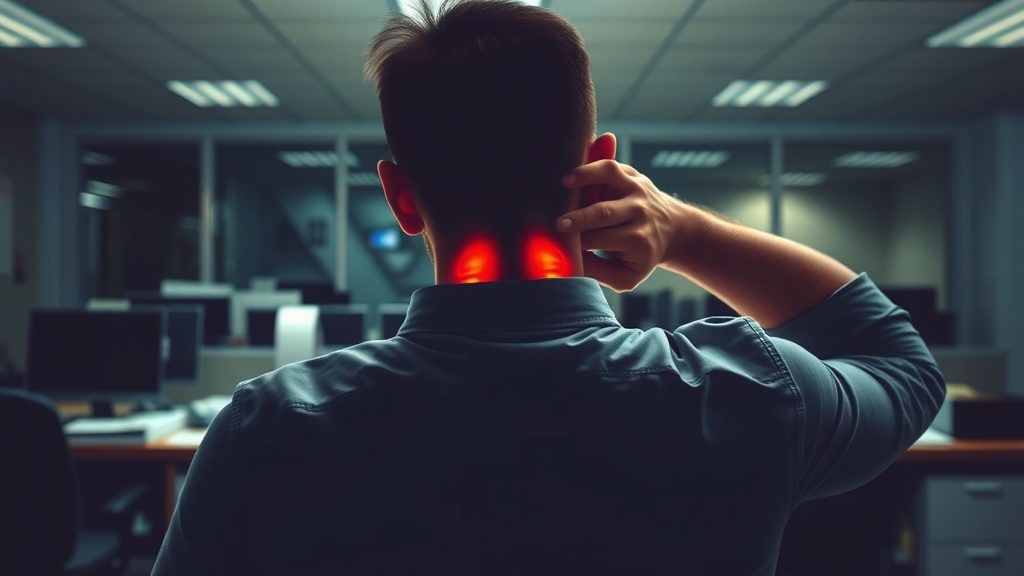
Occipital neuralgia usually feels like sharp, shooting or electric pain that starts at the base of the skull and runs up the back of the head, often on one side. A tension headache is more often a dull, steady band of pressure on both sides. Knowing which pattern you have helps you choose the right next step.
Both can flare after a long day at a desk in Rochester Hills, a slow crawl on M-59, or a cold morning spent with your shoulders hunched up to your ears. Because the two often overlap, here’s how to read the signs, what usually helps, when to see a doctor first, and where chiropractic care may fit.
Key Takeaways
- Occipital neuralgia tends to cause sharp, shooting or shock-like pain from the base of the skull into the scalp.
- Tension headaches tend to feel like dull, steady pressure on both sides of the head.
- Head pain with fever, vision changes, weakness, numbness, trouble speaking or confusion needs emergency care.
- A medical diagnosis comes first. Heat, stretching and hands-on care may help some people.

A hands-on exam helps sort out whether head pain may be coming from the neck.
What Is Occipital Neuralgia?
Occipital neuralgia is a headache disorder caused by irritation or injury of the occipital nerves, which run from the top of the neck up through the scalp. The American Association of Neurological Surgeons (AANS) describes aching, burning or throbbing pain with bursts of shooting or shocking pain that starts at the base of the head and spreads to the scalp on one or both sides. Many people also feel pain behind the eye on the same side.
One detail stands out: the scalp can become very sensitive. AANS notes that something as light as brushing your hair may set off pain. Lying back on a firm pillow or pulling on a snug winter hat can feel uncomfortable for the same reason.
According to Cleveland Clinic, the most common causes are pinched nerves and muscle tightness. It can also follow a head or neck injury, and it’s more likely with arthritis in the upper spine, degenerative disc disease, diabetes or gout. A single bout may last a few seconds or go on for hours.
How Is It Different From a Tension Headache?
The biggest differences are the type of pain and where you feel it. MedlinePlus, from the National Library of Medicine, describes tension headaches as dull, pressure-like pain, like a tight band or vise around the head, felt all over rather than in one spot. They can last from 30 minutes to 7 days and usually don’t cause nausea or vomiting.
The table below is a rough guide, not a way to diagnose yourself.
| What you notice | Often a tension headache | Often occipital neuralgia |
|---|---|---|
| Type of pain | Dull, steady pressure | Sharp, shooting, burning or electric |
| Where it sits | Both sides, temples, forehead or back of the head | Base of the skull up into the scalp, often one side |
| Scalp | Usually normal to the touch | Tender; brushing hair may trigger pain |
| Common triggers | Stress, fatigue, holding one position | Tight neck muscles, pressure on the back of the head |
The two can show up together, and migraines can look like either one. AANS points out that occipital neuralgia is hard to diagnose because of these similarities, and that no single test confirms it. That’s why a provider looks at your whole history and exam, not one symptom.
Why Does Desk Work Make the Back of Your Head Hurt?
Holding your head in one position for a long time strains the small muscles at the base of the skull. MedlinePlus lists typing and other computer work as tension headache triggers, along with sleeping with your neck at an awkward angle or in a cold room. Tight muscles in that same area can also irritate the occipital nerves, which helps explain why the two kinds of head pain often travel together.
For many people around Oakland County, the day looks the same: a commute, hours at a laptop, then the evening on a phone. Add a Michigan winter, when it’s natural to tense your shoulders against the wind and spend more time indoors, and the upper neck rarely gets a break.
A few habits may ease the load:
- Raise your screen so the top of it sits near eye level.
- Stand up and gently move your neck and shoulders several times a day.
- Hold your phone up at chest height instead of looking down into your lap.
- Wear a scarf or a high collar outside so you aren’t hunching against the cold.
- Use a pillow that keeps your head level with your spine.
When Should You See a Doctor Right Away?
Most occipital neuralgia isn’t an emergency, but some symptoms are. Cleveland Clinic advises getting immediate treatment if head or neck pain comes with any of the following:
- Fever
- Double vision or loss of vision
- Weakness or numbness
- Trouble speaking or sudden confusion
If you notice any of these, call 911 or go to the nearest emergency room. For new head pain that doesn’t fit your usual pattern, AANS suggests starting with your primary care doctor, who can refer you to a specialist doctor if needed.
What Treatments May Help Occipital Neuralgia?
Treatment aims to ease the pain, and the right mix depends on the cause. AANS and Cleveland Clinic list non-surgical options such as heat on the painful area, physical therapy, massage, and medications prescribed by a doctor. Doctors may also use nerve block injections, both to confirm the diagnosis and to treat it. Surgery is usually considered only when other care hasn’t helped.
Recovery time varies. Cleveland Clinic notes that people with mild to moderate pain may feel better within a week or two of treatment, while more intense pain can take four to six weeks to improve.
For self-care, Cleveland Clinic suggests gentle neck stretching and massage to relax tight muscles, along with chin tucks. Stop any exercise that makes your pain worse, and check with your provider before starting a new routine.
Can a Chiropractor Help With Occipital Neuralgia?
A chiropractor may help some people whose head pain is tied to tight muscles or stiff joints in the upper neck, ideally as part of a plan that includes your medical doctor. Chiropractic care doesn’t replace a medical diagnosis, particularly for new or changing headaches.
The research is still developing and depends on the headache type. A 2026 chiropractic clinical practice guideline recommends spinal manipulation for cervicogenic headache, which starts in the neck, and suggests using it alongside other therapies rather than on its own for tension-type headache. The authors also note that high-certainty evidence is limited for many therapies, and very little research looks at occipital neuralgia by itself.
In practice, conservative care for neck-related head pain often combines gentle hands-on care, soft tissue work, posture and desk changes, and home exercises. If your exam points to something outside that scope, the right move is a referral.
What to Expect at Delta Chiropractic
At Delta Chiropractic in Rochester Hills, a visit starts with a conversation about your headaches and a hands-on look at your neck and posture. We’ll explain what we found and whether care here makes sense for you, or whether you should see another provider first. You can read more about our approach to headache care in Rochester Hills.
Frequently Asked Questions
Is occipital neuralgia dangerous?
Cleveland Clinic says it isn’t life-threatening, but the pain can be intense and disruptive. Because other conditions can look similar, have new head pain checked by a doctor.
Can my pillow cause pain at the base of my skull?
It can play a part. A pillow that tips your head forward or to the side keeps the upper neck strained all night, and a tender scalp may hurt more against a firm pillow. Start with one that keeps your head level with your spine.
Is heat or ice better for occipital nerve pain?
AANS notes that many people feel relief from a heating pad on the painful area. Some prefer a cold pack for short periods. Use whichever feels better, and protect your skin either way.
Can a car accident or fall lead to occipital neuralgia?
Yes. Cleveland Clinic lists head and neck injuries among the causes. If head pain started after a crash or fall, see a doctor first to rule out other injuries.
How can I tell if it’s a migraine instead?
Migraines are often throbbing and may come with nausea and sensitivity to light or sound. AANS suggests seeing a doctor when you have unusual, sharp pain in the neck or scalp without nausea or light sensitivity, a pattern that may point toward occipital neuralgia. Some people have features of both.
If pain at the base of your skull keeps coming back, call Delta Chiropractic at (248) 963-8181 or request a visit online. We’ll start by listening and checking how your neck may be involved.
This article is for general information and is not medical advice. Talk with a licensed provider about your situation.