

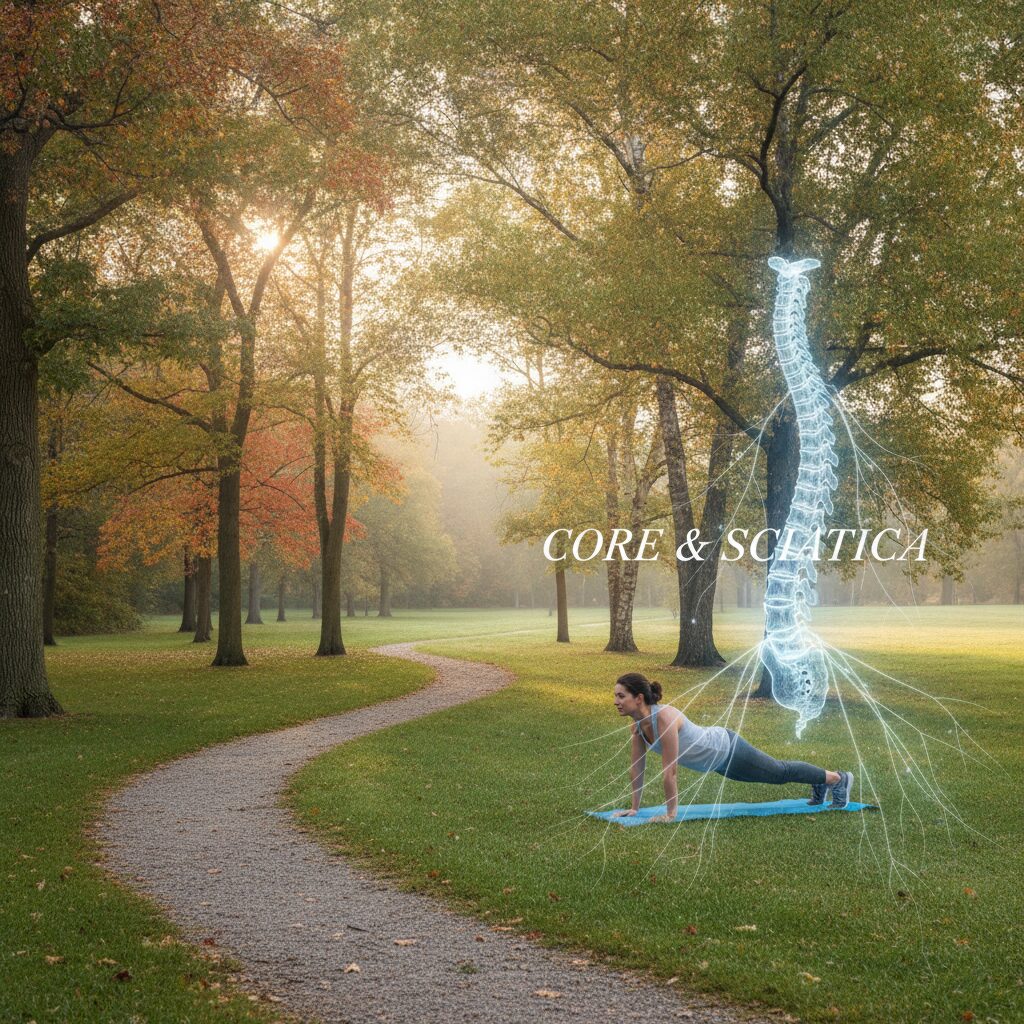
Most people think of sciatica as a nerve problem that starts and ends in the lower back or leg. That is only part of the picture. Your trunk muscles act like a natural corset for the spine, and when they are weak, uncoordinated, or slow to switch on, the lumbar spine absorbs forces it was never meant to handle alone. Over time, that extra load can irritate the discs, joints, and soft tissues surrounding the sciatic nerve. If you have been searching for sciatica treatment Rochester Hills residents can trust, understanding the role of your core is one of the smartest places to begin.
This is not about chasing a six-pack or doing hundreds of crunches. Core strength, in the clinical sense, means having deep stabilizing muscles that fire at the right moment and share the workload with your hips and back. Plenty of people who look fit on the outside still struggle with trunk control, especially if they sit for long stretches, lift awkwardly, or favor one side during sports and chores. In this article, we will walk through how core weakness develops, how it can feed into sciatic symptoms, what warning signs to watch for, and which practical steps tend to help. Think of it as a roadmap for making sense of your symptoms and having a more informed conversation with a qualified provider.
What the Core Actually Does for Your Spine
The word core gets used loosely, so it helps to define it. Your core is a group of muscles that wraps around the midsection like a cylinder. The deep abdominal muscle called the transversus abdominis acts as the front wall, the multifidus and spinal extensors form the back wall, the diaphragm sits on top, and the pelvic floor forms the base. Together they regulate pressure inside the abdomen and keep the vertebrae steady during movement.
When this system works well, forces from walking, lifting, and twisting are spread across the whole trunk. When it does not, the lower lumbar segments, which already carry a lot of weight, take a disproportionate share. Those segments sit right where the nerve roots that form the sciatic nerve exit the spine. If you want to explore sciatic nerve pain relief options, it is worth knowing that many of them aim to restore this kind of shared support rather than simply quieting symptoms.
How a Weak Core Leads to Nerve Irritation
Sciatica generally happens when something compresses or irritates one of the nerve roots that join to make the sciatic nerve. Common culprits include a bulging disc, narrowing of the spaces where nerves exit, or tight tissue pressing on the nerve along its path through the buttock. A weak core does not usually cause these problems on its own, but it can create conditions that make them more likely or more stubborn.
Here is the basic chain of events. When the deep stabilizers lag behind, the spine moves more than it should during everyday tasks like bending to tie a shoe. Discs experience repeated uneven pressure. Surrounding muscles tighten in response, trying to guard the area, and that guarding can squeeze already sensitive tissue. The hips may also compensate, becoming tight or overworked. The result is a cycle in which instability leads to irritation, irritation leads to protective tension, and tension limits the very movement the body needs to recover.
Everyday Habits That Quietly Weaken Trunk Support
Core weakness rarely arrives overnight. It builds through small, repeated choices. Long hours in a chair let the deep abdominal muscles go dormant, because the seat and backrest do the stabilizing for you. Slouching on the couch does the same. Even people who exercise can fall into patterns, such as relying on machines that support the torso, or training only the muscles you can see in the mirror while neglecting the deeper ones.
Other contributors include recovering from an injury and avoiding movement afterward, carrying extra weight around the midsection, and pregnancy or childbirth changes that were never fully retrained. Holding your breath while lifting is another subtle one, since it bypasses the natural pressure control the diaphragm and deep muscles provide. If any of this sounds familiar, you are in good company. Most trunk weakness is simply a side effect of modern routines, and the encouraging part is that these muscles tend to respond well to the right kind of attention.
Warning Signs Your Core May Be Part of the Problem
You do not need a clinical test to notice some of the early clues. Pay attention to how your body behaves during ordinary movement. Does your low back ache after standing in one place for a short time? Do you feel a pulling or buzzing sensation down one leg after sitting, then relief when you walk around? Do you find yourself bracing a hand on your thigh when you stand up from a low seat?
- Your lower back feels tired or sore by mid-afternoon, even without heavy activity.
- Symptoms flare when you cough, sneeze, or strain.
- You feel wobbly or unsteady when standing on one leg.
- Your belly pushes forward and your lower back arches more than it used to.
- Leg symptoms seem to follow long periods of sitting or driving.
None of these confirm a diagnosis, but together they can point toward a stability issue worth discussing with a professional who can examine you in person.
Why Hip and Glute Strength Belongs in the Conversation
The core does not work alone. The muscles of the hips, especially the glutes, share the job of controlling the pelvis, which is the foundation your spine rests on. When the glutes are weak, the pelvis tilts or shifts, and the lower back often compensates by working harder. That compensation can set up the same irritation described earlier.
Many people with sciatic symptoms are surprised to learn that strengthening the hips and trunk together tends to matter more than hammering the abs in isolation. A balanced approach looks at how the whole chain moves: ankles, knees, hips, pelvis, and spine. Providers who evaluate movement patterns can often spot where one link is lagging and loading its neighbors unfairly. If you are looking into sciatica treatment Rochester Hills offers, ask whether the plan addresses this broader picture rather than only the spot that hurts. A thorough exam, such as one from a Chiropractor in Rochester Hills, MI, can help identify which links in that chain deserve attention first.
Gentle Core Training That Respects a Sensitive Back
If your back or leg is already irritated, aggressive ab workouts can backfire. Sit-ups and full crunches repeatedly flex the spine and can aggravate certain disc problems. The goal early on is awareness and control, not burning effort. Start with slow breathing that expands the ribs and belly, then gently draw the lower abdomen inward as if zipping a snug pair of pants, without holding your breath.
From there, many people progress through simple positions that keep the spine steady while the limbs move, such as lying on your back and lifting one foot a few inches, or the bird dog position on hands and knees. Quality beats quantity, so a few clean repetitions beat a long, shaky set. For movement ideas that stay easy on the body, this guide on Low-Impact Exercise Ideas for Back Pain Relief in Rochester Hills offers a helpful starting point. Stop any exercise that sends sharp or spreading symptoms down the leg.
Core Weakness Versus Other Common Sciatica Contributors
Core weakness is one piece of a larger puzzle, and it helps to see how it compares with other typical contributors. The table below offers a general overview, not a diagnosis. Real cases often involve more than one factor at once.
| Contributor | What Happens | Typical Clue |
|---|---|---|
| Core weakness | Spine takes extra load during movement | Fatigue or ache after standing or sitting |
| Disc irritation | Disc material presses on a nerve root | Worse with bending or coughing |
| Tight hip muscles | Soft tissue squeezes the nerve in the buttock | Pain deep in the buttock area |
| Joint stiffness | Reduced motion shifts stress elsewhere | Morning stiffness that eases with movement |
Posture, Breathing, and Motor Control Basics
Strength is only half of the equation. Timing matters just as much. A person can have decent muscle bulk yet still lack the quick, automatic activation that protects the spine before a movement begins. Researchers who study back pain have long noted that stabilizing muscles often fire late in people with persistent symptoms, which is why retraining coordination can be as valuable as adding resistance.
Breathing plays a surprisingly large role. Shallow chest breathing keeps the diaphragm from doing its job as a pressure regulator, which can push extra work onto the neck and low back. Practicing slow, low-belly breaths for a few minutes a day helps reconnect the diaphragm with the deeper abdominal wall and pelvic floor. Pair that with small posture resets throughout the day: feet flat, ribs stacked over the pelvis, and shoulders relaxed. These micro adjustments are not dramatic, but repeated hundreds of times a week they quietly shift how your trunk shares load.
Building Core Support Into a Busy Workday
Whether you run a small business, write code, or spend your days managing a household, finding time for formal workouts can feel unrealistic. The good news is that core support can be woven into things you already do. Set a timer to stand and reset every thirty to forty-five minutes. When you stand up from a chair, exhale and gently brace your midsection rather than lurching forward and pushing off your thighs.
Consider a few simple adjustments: sit close enough to your desk that your forearms are supported, keep your feet grounded, and avoid perching on the edge of the seat for long stretches. When lifting a box, bring it close to your body and exhale on the effort. If you work from a laptop, raise the screen so you are not collapsing your trunk forward. These habits will not replace targeted care, but they reduce the daily stress on tissues that are already sensitive and make any structured program more effective.
When Symptoms Come and Go
One of the most frustrating features of sciatica is its unpredictability. You may feel fine for a week, then wake up with a familiar ache down the leg after a long drive or a busy weekend. This on-and-off pattern often reflects how well your trunk and hips are managing load on a given day. When support is adequate, the nerve stays calm. When fatigue, stress, or a sudden strain overwhelms that support, symptoms resurface.
Tracking what preceded each flare can be revealing. Note your activity level, how long you sat, how well you slept, and what you lifted. Patterns tend to emerge. If you are dealing with this kind of fluctuation, reading What to Do When Sciatica Pain Comes and Goes for Rochester Hills Residents can give you additional context. Intermittent pain is still worth addressing, because the underlying weakness or mechanical stress does not disappear just because the symptoms take a break.
Finding Local Sciatica Treatment in Rochester Hills
If your symptoms are persistent, spreading, or interfering with sleep and daily life, it is reasonable to seek a hands-on evaluation rather than guessing. Local providers who focus on conservative care typically begin with a detailed history and a physical exam that looks at how you move, not only where it hurts. That information helps them figure out whether core control, hip mobility, joint function, or something else is driving your discomfort.
When researching sciatica treatment Rochester Hills offers, consider asking how a plan will address strengthening and movement retraining in addition to symptom relief. A good plan usually includes education, so you understand what you are working on and why. To learn more about one local option, click here. Seek urgent medical attention if you notice loss of bladder or bowel control, numbness in the groin area, or rapidly worsening leg weakness, since those can signal a more serious condition.
Your Next Steps
Core weakness is rarely the sole cause of sciatica, but it is a common and very workable contributor. When the deep stabilizers of your trunk are underperforming, the lower spine absorbs extra stress, nearby muscles tighten in protest, and a sensitive nerve can end up caught in the middle. The encouraging part is that these muscles are trainable at nearly any age, and the early steps are simple: learn to breathe with your diaphragm, practice gentle bracing, strengthen the hips alongside the trunk, and break up long stretches of sitting.
Remember that progress usually looks gradual. You may notice small wins first, like standing longer before your back tires or getting out of the car with less stiffness. Those small wins add up. Keep an eye on the warning signs that call for prompt medical attention, and do not hesitate to get a professional opinion if symptoms linger or keep returning. A thoughtful evaluation can separate core-related issues from disc, joint, or hip problems so your effort goes where it counts.
Above all, stay patient and consistent. A steady, well-guided approach to building trunk support, paired with smart daily habits, gives your spine a stronger foundation and gives your nerve the room it needs to settle. Start with one or two changes this week, build from there, and let your body show you what it responds to best.