

When your lower back aches, the last thing you probably want to do is exercise. Yet staying completely still often makes stiffness worse, and many people searching for back pain relief Rochester Hills offers quickly discover that gentle, low-impact movement is one of the most useful tools they already have. The trick is choosing activities that keep the spine moving without jarring it, twisting it aggressively, or loading it beyond what it can currently handle.
This guide is written for busy people: small business owners who spend long days on their feet or behind a counter, developers who sit for hours, and anyone else whose back complains by the end of the week. You will not need a gym membership, expensive equipment, or an hour of free time. Most of the ideas below take five to twenty minutes and can be done in a living room, a garage, or a nearby park.
We will cover walking, water-based exercise, mobility drills, core activation, mild strength work, and ways to build a routine that actually sticks. Along the way, we will also talk about when exercise alone is not enough and it makes sense to get a professional opinion. Keep in mind that this is general educational information, not medical advice. If your pain is severe, spreading, or accompanied by numbness or weakness, get evaluated before starting anything new.
Why Gentle Movement Beats Bed Rest
For most routine back soreness, prolonged rest tends to backfire. Muscles around the spine stiffen, joints lose their lubricating motion, and the nervous system can become more protective, which makes ordinary movements feel more threatening than they are. Low-impact exercise gently interrupts that cycle by encouraging blood flow, easing guarding, and reminding the body that movement is safe.
Low-impact simply means one foot stays in contact with the ground or the activity is supported, such as in water or on a stationary bike. There is no pounding, no sudden direction changes, and no heavy loading. That makes these options approachable even on a stiff day. Many residents exploring Rochester Hills MI back pain relief options find that pairing gentle activity with professional guidance gives them the confidence to stay active rather than avoid movement out of fear. A good rule of thumb is that mild stretching or muscle fatigue is fine, while sharp, shooting, or worsening pain is a signal to stop and reassess.
Walking Routines That Respect a Sensitive Back
Walking is the simplest low-impact option, and it is easy to scale. Start with ten minutes on level ground at a comfortable pace, then add a few minutes every few days. Choose supportive shoes with decent cushioning, and avoid walking on steeply sloped or uneven surfaces at first, since those can pull the pelvis and lower back into awkward positions.
Posture matters more than speed. Let your arms swing naturally, keep your gaze forward rather than at your phone, and take moderate steps instead of long reaching strides. If you work at a desk, try the short-burst approach: a five-minute walk every hour is often kinder to the spine than one long walk at the end of the day. Local trails and neighborhood sidewalks work well in warmer months, while a mall loop or an indoor track keeps the habit alive during Michigan winters. Pay attention to how your back feels an hour afterward and the next morning. Mild looseness is a good sign, while increased aching that lingers suggests you should shorten the walk or slow down.
Water-Based Exercise for Weight-Free Motion
Water supports much of your body weight, which takes pressure off the spine and joints while still providing gentle resistance. That combination is why pool exercise is a favorite for people whose backs feel too irritated for land-based work. You do not need to be a strong swimmer. Walking in chest-deep water, doing gentle leg swings, or practicing slow arm sweeps can all provide benefits.
Try water walking forward, backward, and sideways for about ten minutes, keeping your abdomen lightly engaged and your torso tall. If you swim laps, freestyle with a relaxed kick or backstroke is usually more comfortable than breaststroke, which can strain the lower back through repeated arching. A pool noodle under the arms or a kickboard can help you stay upright without overworking the neck and shoulders. Warm water is especially soothing for tight muscles, but avoid very hot conditions if you have circulation or blood pressure concerns. Community pools and fitness centers across the region often offer open lap hours or water aerobics classes designed for gentler movement.
Mobility Drills for Stiff Mornings
Mobility work focuses on moving joints through comfortable ranges rather than building strength or burning calories. It is ideal first thing in the morning or after a long stretch of sitting. The goal is smooth, pain-free motion, not forcing a deep stretch.
- Pelvic tilts: Lie on your back with knees bent and gently rock your pelvis to flatten, then slightly arch, your lower back. Ten slow repetitions is plenty.
- Cat-camel: On hands and knees, slowly round your spine toward the ceiling, then let it sag gently toward the floor. Keep the range small if it feels tight.
- Knee-to-chest hugs: Draw one knee toward your chest and hold for twenty seconds, then switch sides.
- Supported child’s pose: Sit back toward your heels with a pillow under your torso and breathe slowly for a minute.
Move slowly and breathe steadily. If a position increases pain in your back or sends symptoms down a leg, back out of it and try a smaller range or skip it entirely.
Core Activation Without Crunches
A steady core helps share the load your spine carries all day, but traditional sit-ups and crunches can irritate a sensitive back. Gentler activation drills build endurance in the deep abdominal and back muscles without repeatedly flexing the spine. For people dealing with ongoing discomfort, learning these basics is often more valuable than any single stretch, and a Chiropractor in Rochester Hills, MI can help you confirm your form so you are strengthening the right muscles.
Start with the dead bug: lie on your back with knees bent over hips, press your lower back lightly toward the floor, and slowly lower one heel toward the ground, then return and alternate. Add the bird dog next, extending the opposite arm and leg from a hands-and-knees position while keeping your hips level. Forearm planks from the knees and side planks with bent legs are progressions for later. Aim for short holds of five to ten seconds, repeated several times, and focus on breathing normally rather than clenching.
Stationary Cycling and Elliptical Options
Machines can offer a controlled, predictable way to raise your heart rate without pounding the spine. A stationary bike with an upright or recumbent seat is often well tolerated, particularly the recumbent style, which supports the lower back and keeps the hips and spine in a stable position. Set the seat height so your knees have a slight bend at the bottom of each pedal stroke, and keep resistance light at first.
An elliptical trainer can also work well because your feet never leave the pedals, eliminating impact. Stand tall, avoid leaning heavily on the handles, and keep your stride moderate. Ten to fifteen minutes at a conversational pace is a good starting point. For people who spend their days sitting, remember that a bike posture resembles a desk posture in some ways, so the elliptical may feel better if you are already stiff from sitting. Try each and let your own comfort guide the choice. Use a fan, drink water, and cool down with a minute or two of easy pedaling before you stop.
Yoga and Tai Chi Basics for Balance and Calm
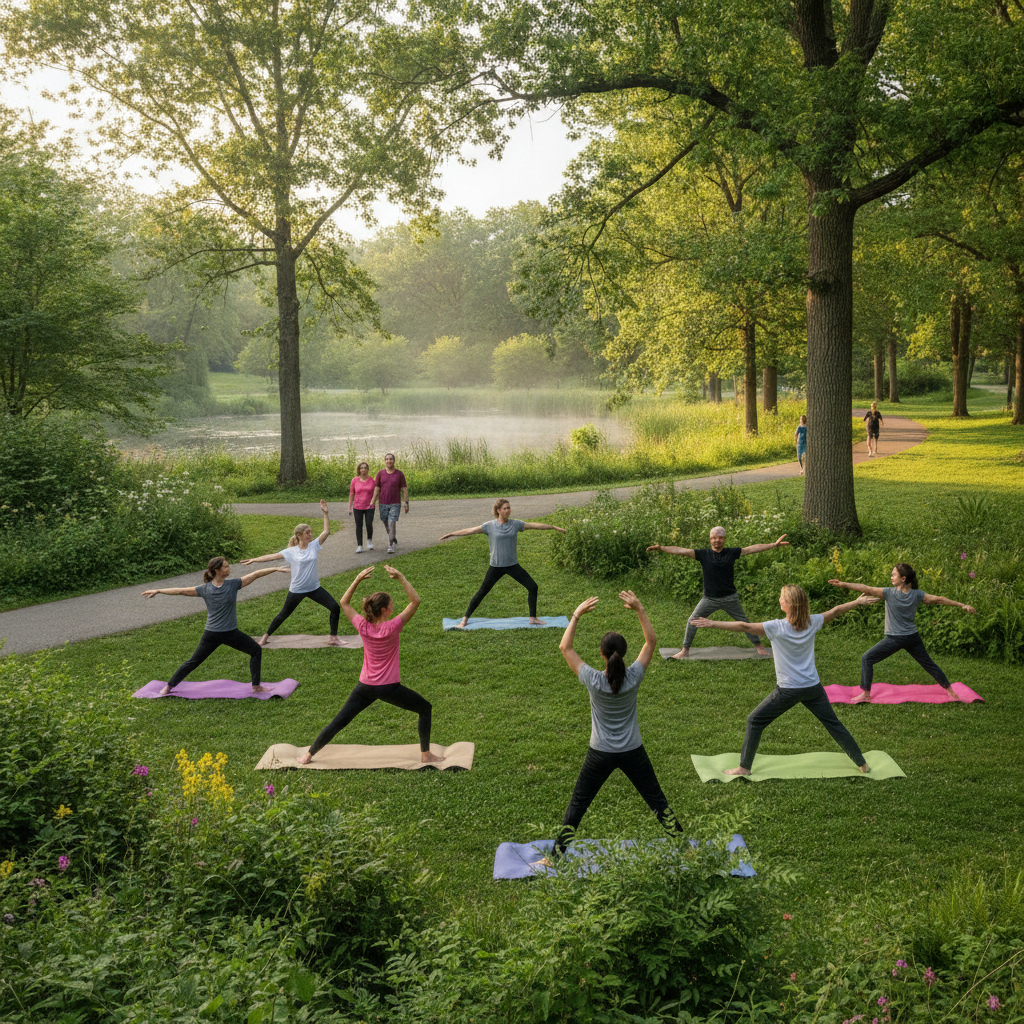
Slow, mindful practices like gentle yoga and tai chi combine mobility, light strengthening, and breathing in one session. Many people find that the calming effect helps reduce the muscle tension that often accompanies stress and desk-bound workdays. Look for beginner or restorative classes, and tell the instructor about your back so they can suggest modifications.
At home, a few approachable poses include a supported bridge, a gentle seated twist within a comfortable range, and a reclined figure-four stretch for the hips. Avoid deep forward folds and extreme backbends until your back feels more settled. Tai chi, with its flowing weight shifts and upright posture, can improve balance and body awareness, which is especially helpful if you have felt unsteady or guarded. Many community centers and studios offer sessions during the day or evening, and short online videos can fill the gaps when your schedule is packed. The key is consistency, not intensity, so even fifteen minutes a few times a week counts.
Light Strength Work for Hips and Glutes
Weak or underused hip and glute muscles can force the lower back to work harder than it should. Gentle strengthening takes some of that burden off the spine. You do not need heavy weights; bodyweight and light resistance bands are plenty at the start.
Glute bridges are a staple: lie on your back with knees bent, press through your heels, lift your hips until your body forms a straight line from shoulders to knees, and lower slowly. Sit-to-stand repetitions from a sturdy chair train the same muscles in a functional way. Clamshells and side-lying leg lifts target the outer hips, while a mini-band around the thighs adds a little challenge. Two sets of eight to twelve repetitions, two or three days a week, is a sensible beginning. If your symptoms involve pain traveling down a leg, read about Sciatica and Driving Pain: How Rochester Hills Commuters Can Find Relief to better understand how daily habits like long drives interact with nerve irritation before ramping up your routine.
A Simple Weekly Plan You Can Actually Follow
The best routine is the one you will repeat. Rather than chasing a perfect program, build a flexible week with a mix of activities and plenty of rest. The table below shows one sample structure you can adapt to your own schedule and comfort level.
| Day | Activity | Duration |
|---|---|---|
| Monday | Walking plus mobility drills | 20 minutes |
| Tuesday | Core activation and glute bridges | 15 minutes |
| Wednesday | Water walking or easy swim | 25 minutes |
| Thursday | Rest or light stretching | 10 minutes |
| Friday | Gentle yoga or tai chi | 20 minutes |
| Saturday | Cycling or elliptical | 15 minutes |
| Sunday | Rest and recovery | As needed |
Shuffle the days around as needed. If a session feels like too much, cut it in half rather than skipping it entirely.
Recovery Habits That Support Your Exercise
What you do between workouts matters nearly as much as the workouts themselves. Sleep is when tissues repair, so protecting your rest is part of any back-care plan. Your sleeping position can make a real difference in how you feel the next morning, and resources like Sleeping Positions That May Ease Sciatica Symptoms for Rochester Hills Patients offer practical ideas for arranging pillows and posture so your spine stays comfortable overnight.
Beyond sleep, consider short movement breaks during the workday, a supportive chair with the screen at eye level, and regular sips of water. Gentle heat on a stiff lower back before activity and a brief cool-down stretch afterward can leave you feeling looser. Many people also benefit from simple stress management, since tension in the shoulders and hips often feeds into back discomfort. Keep a short log of what you did and how you felt, because patterns tend to emerge within a couple of weeks and help you fine-tune the plan.
When Exercise Alone Is Not Enough
Self-guided movement helps many people, but it is not a cure-all. Pain that keeps worsening, lasts beyond a few weeks, wakes you at night, or travels into the legs deserves a professional look. Seek urgent medical attention for numbness in the groin or saddle area, loss of bladder or bowel control, sudden leg weakness, or back pain following a significant fall or accident.
If your symptoms are persistent but not an emergency, a hands-on evaluation can identify movement restrictions, muscle imbalances, or posture habits that a home routine might miss. Residents looking for back pain relief in Rochester Hills often start with a thorough consultation, then combine a customized plan of conservative care with the low-impact exercises described here. Be honest about what you have already tried and what aggravates or eases your pain, since those details help guide recommendations. Progress is rarely a straight line, so expect good days and slower days while the overall trend moves in the right direction.
Your Next Steps
Back discomfort can feel discouraging, especially when work and family already fill your schedule. The encouraging news is that small, consistent actions add up. A ten-minute walk, a few pelvic tilts before bed, or a short water session on the weekend can gradually rebuild confidence in your body and reduce the stiffness that makes everything harder.
Start by picking just two activities from this guide that appeal to you and fit your week. Do them at an easy effort for two weeks, noting how your back responds. Then add a third, or lengthen the sessions slightly. Avoid the temptation to jump straight to hard workouts on a good day, since overdoing it is one of the most common reasons people feel set back. Let comfort, not ego, set the pace.
Remember the big picture: gentle movement, steady strength in the core and hips, good sleep, smart desk habits, and a willingness to ask for help when symptoms do not improve. Whether you run a small business, write code all day, or simply want to enjoy your weekends without wincing, a thoughtful low-impact routine puts you back in the driver’s seat. If your pain stays stubborn or begins to spread, reach out to a qualified professional for a personalized plan. Your spine does a lot for you every day, and it responds well to patient, consistent care.